
How to Perform an SEO Audit in 2026 (Simple, Proven, and Practical)

Honestly, a good SEO audit can feel like it prints money. It’s the foundational step for uncovering technical issues, diagnosing frustrating traffic drops, and setting the stage for stronger rankings by revealing high-value opportunities you never knew you had. In the modern era of AI-driven search, a regular SEO audit is no longer optional, it’s the immune system of a well-optimized website.
The search landscape has changed dramatically. We’re not just dealing with traditional blue links anymore. Users now get answers directly from AI Overviews and AI Mode, and many are turning to platforms like ChatGPT and Claude for information. On top of that, Google’s mobile-first indexing and relentless focus on user experience through Core Web Vitals mean the technical performance of your site is under constant scrutiny.
Short and simple: skipping audits means leaving potential traffic and revenue on the table.
This guide provides a step-by-step blueprint for conducting a thorough SEO audit, giving you a clear path from analysis to action. With these actionable insights, you can turn complex data into real-world results. Now, let’s gather the right tools and prepare for a successful audit.
2. Preparation & Tools: Setting the Foundation for a Successful Audit
Before you dive into the nitty-gritty, a solid foundation is crucial. This preparation phase is about defining your goals, gathering the right tools, and performing initial checks to ensure the data you collect is accurate and meaningful.
First, you need to establish a baseline. Head over to Google Analytics to review your current organic traffic trends. You can find this by navigating to “Reports” > “Acquisition” > “Traffic acquisition” and filtering the report for “Organic Search.” This gives you a snapshot of where you are today so you can measure the impact of your changes later.
Next, equip yourself with a few essential tools. In my experience, you can’t do a proper audit without them.
- Google Search Console and Google Analytics: The source of truth for your site’s performance, indexing status, and identifying top pages.
- Screaming Frog: The industry standard for a comprehensive technical SEO audit, crawling your site to find errors, check internal links, and analyze site architecture.
- Semrush, Ahrefs, or Moz: Powerful platforms for backlink analysis, keyword research, and benchmarking against your competitors.
- PageSpeed Insights: A free Google tool for measuring Core Web Vitals and getting specific recommendations to improve your site’s performance.
In my experience, before touching keywords, I always check indexing first. Use Google Search Console to look at your site’s coverage reports. Pay close attention to any pages marked as “Crawled–currently not indexed,” as this means Google has seen the page but decided not to include it in its index, a problem you’ll need to fix.
With your goals defined and tools ready, it’s time to move into the first major stage of the audit: the technical deep-dive.
3. Technical SEO Audit: The Nuts and Bolts of Your Website’s Health
In 2026, SEO audits are no longer about one thing.
They combine technical health, AI visibility, content quality, and performance.
This table breaks everything into clear, actionable steps.
| Audit Stage | Audit Step | Technical Check/Requirement | Tools Recommended | Success Metric or KPI | Implementation Priority (Inferred) |
| Preparation | Verify Crawlability | Check robots.txt file to ensure essential crawlers (Googlebot, OAI-SearchBot, PerplexityBot) are not blocked. | Screaming Frog, Google Search Console | Status: All relevant pages indexed; 0 pages blocked by robots.txt unexpectedly. | High |
| Execution | Eliminate Duplicate Site Versions | Ensure only one version (HTTPS, WWW or non-WWW) is accessible via 301 redirects. | Web Browser, Screaming Frog | Indexing status: Single canonical version indexed; 301 redirect for HTTP to HTTPS. | High |
| Execution | Verify Mobile-friendliness | Test responsiveness, font sizes, button spacing, and tap targets for mobile-first indexing. | Google Lighthouse, Bing’s Mobile Friendliness Test Tool, PageSpeed Insights | Mobile usability standards met; easy readability without zooming. | High |
| Execution | Assess Site Speed & Core Web Vitals | Evaluate performance metrics including loading time and layout stability. | PageSpeed Insights, Google Search Console, Google Lighthouse | LCP < 2.5s; INP < 200ms; CLS < 0.1; Performance score > 80. | High |
| Execution | Fix Technical Crawl Errors | Identify and resolve 404 errors, redirect loops, and server errors. | Screaming Frog, Semrush Site Audit, Sitebulb | Status codes: 0% 5xx errors; 404 recovery for pages with historical traffic. | High |
| Preparation | Benchmark AI Visibility | Monitor brand appearance frequency and mentions in AI-generated answers. | Semrush AI Visibility Toolkit, ChatGPT, Perplexity, Claude | AI Visibility Score (scale 100); Number of mentions and cited pages. | Medium |
| Strategic Analysis | Analyze Content Quality & Pruning | Evaluate pages for thin content (< 500 words), low value, and keyword cannibalization. | Google Search Console, Google Analytics 4 | Bounce rate reduction; Improved CTR; removal of ‘Zombie Pages’. | Medium |
| Strategic Analysis | Optimize for SERP Features & AI | Audit structured data and add ‘answer blocks’ under question-based headings. | Schema Validator, Semrush Position Tracking, Detailed SEO extension | Appearance in Featured Snippets, PAA boxes, and AI Overviews. | Medium |
| Strategic Analysis | Analyze Backlink Profile | Evaluate referring domains and detect toxic/spammy links. | Semrush Backlink Analytics, Ahrefs, Moz | Domain Authority Score; Ratio of high-quality referring domains. | Medium |
| Strategic Analysis | Identify Content & Keyword Gaps | Compare rankings against competitors to find untapped long-tail keywords. | Semrush Keyword Gap tool, Ahrefs, Surfer SEO | Number of new keywords targeted; Position movement for ‘almost-winners’. | Medium |
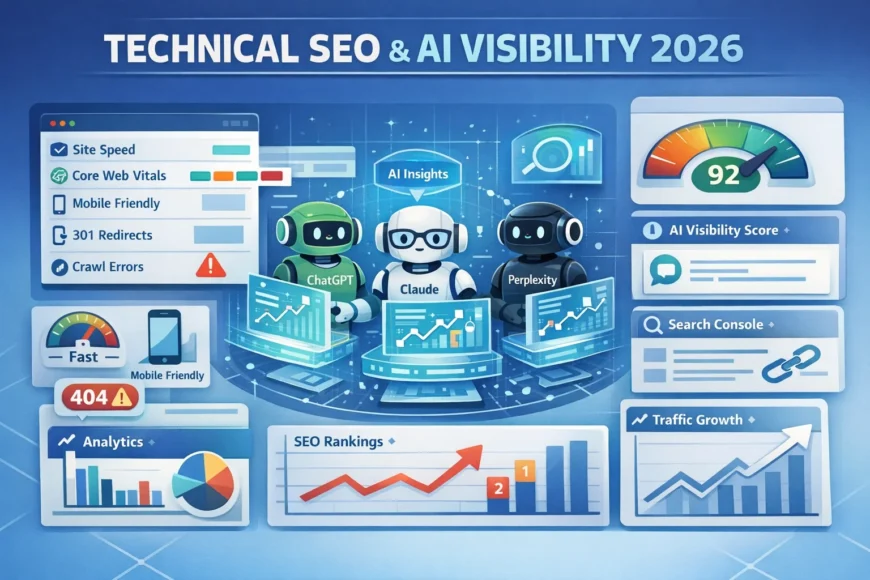 A technical SEO audit is the bedrock of all your other efforts. If search engines can’t easily access, crawl, and understand your site, even the best content in the world won’t rank. This stage is about ensuring your website is accessible, fast, and makes sense to both search engine crawlers and human users.
3.1. Crawlability & Access
- Analyze Robots.txt: This simple text file tells crawlers which parts of your site they can and cannot access. Go to yourdomain.com/robots.txt and make sure you aren’t accidentally blocking important crawlers like Googlebot. In today’s landscape, you also want to ensure crawlers like GPTBot (OpenAI), ClaudeBot (Anthropic), OAI-SearchBot, and PerplexityBot can access your content. I’ve seen this many times, a single line of code here can make your entire site invisible.
- Identify 404 Errors & Redirects: Use a tool like Screaming Frog to crawl your site and find broken links (404 errors), redirect chains, and redirect loops. Prioritize redirecting any 404 pages that have historical traffic or valuable backlinks to a relevant, live page. This is one of the fastest ROI moves you can make.
- Check Sitemap Accuracy: Your sitemap lists all your important pages, making it easier for search engines to find them. Check it for errors and make sure it doesn’t include incorrect pages that you don’t want indexed.
3.2. Mobile & Speed
- Explain Mobile-First Indexing: It’s official: Google primarily uses the mobile version of your site for indexing and ranking on both mobile and desktop. A poor mobile experience is a direct hit to your SEO.
- Define Core Web Vitals: Don’t let the name intimidate you. Core Web Vitals are just three simple metrics Google uses to measure real-world user experience:
- Largest Contentful Paint (LCP): How fast does the main content on your page load?
- Interaction to Next Paint (INP): INP measures how long it takes for a site to respond to user interactions, like clicks or taps. Google wants this to be under 200 milliseconds.
- Cumulative Layout Shift (CLS): Does your page layout jump around unexpectedly as it loads?
- Address Responsive Design: Use Google’s PageSpeed Insights to test for mobile-friendliness. The tool will flag issues like text that’s too small to read or tap targets that are too close together. Remember, speed isn’t just for humans anymore. AI crawlers don’t wait; you have about three seconds before they bounce.
3.3. Site Architecture
- Check for Duplicate Versions: Type all four versions of your domain into a browser: http://yourdomain.com, https://yourdomain.com, http://www.yourdomain.com, and https://www.yourdomain.com. Only one version should be accessible; the other three should automatically 301 redirect to it. If they don’t, Google may see them as separate websites, splitting your authority.
- Explain Crawl Depth: Crawl depth is the number of clicks it takes to get from your homepage to any other page on your site. As a best practice, all your important pages should be reachable in three clicks or less, as pages deeper than that are practically invisible to Google. In my experience, this isn’t just a technical tweak; it’s about respecting the value of a crawler’s limited time. Making your best pages easy to find is a direct signal to Google that they’re important.
- Assess Internal Linking & Orphan Pages: A good internal linking structure ensures that every page on your site has at least one link pointing to it, preventing “orphan pages.” These pages are very hard for search engines to find. Use your audit tool to find pages with fewer than five internal links and add more where relevant.
Now that your site’s technical foundation is solid, let’s look at the new frontier: ensuring you’re visible in AI-generated answers.
4. AI Visibility & The Modern Search Landscape
SEO in 2026 is about being undeniably valuable to both humans and machines. A modern audit must now include checking and improving your brand’s presence in AI-generated answers. This is the new frontier of AI SEO.
- Benchmark your AI visibility score by using tools that measure how often your brand appears in AI-generated responses. Track this score and the number of brand mentions to set a baseline for growth.For example, platforms like Wellows provide a structured way to track AI visibility across AI engines, helping you quantify how often your site is cited — and where competitors are being referenced instead of you, while complementing your broader technical seo checklist with AI-driven visibility insights.
- Fact-check AI’s understanding of your brand by querying platforms like ChatGPT with questions such as “What does [your company] do?” Document any factual inaccuracies, outdated information, or hallucinations to identify misinformation that needs correcting.
- Audit your topic authority and entity mapping to see if AI platforms connect your brand with relevant business topics. Think of your brand as a person (an ‘entity’) in Google’s and AI’s eyes. Does this ‘person’ have a reputation for expertise in a specific area? Auditing your topic authority is about checking if AIs connect your brand’s name to the problems you solve by asking questions like, “What are the best “product category” tools?”.
- Reiterate AI crawler permissions by checking your robots.txt file again to ensure you are allowing crawlers like GPTBot, ClaudeBot, and OAI-SearchBot. This is how you give these platforms permission to use your content in their responses.
With a clear picture of how AIs perceive your site, it’s time to shift focus to how your site’s own content is structured and optimized.
5. Content & On-Page Analysis: Optimizing What Your Audience Sees
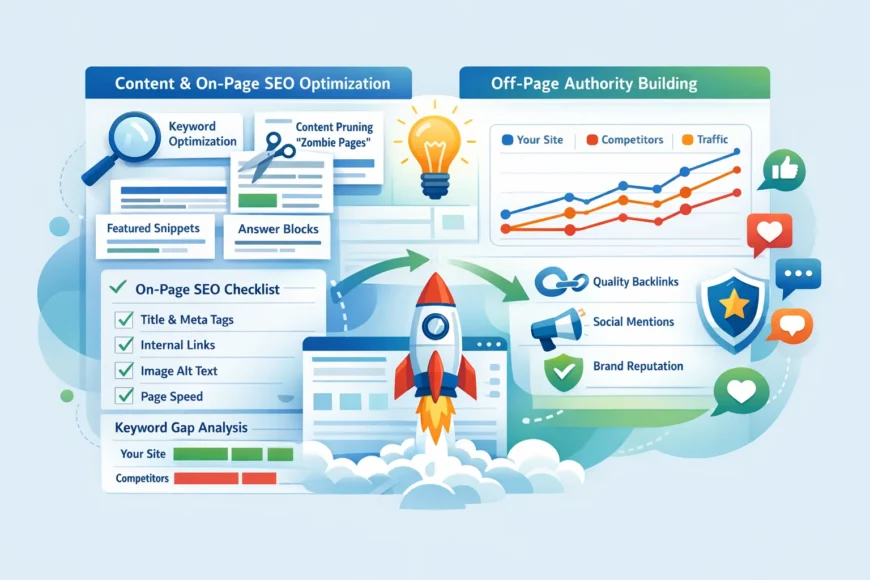 With your technical foundation secure, it’s time to shift focus to the quality and optimization of the actual content on your site. This analysis ensures every page aligns with user intent and is perfectly structured for search engines.
- Detail Keyword Cannibalization Cleanup: This happens when two or more of your pages compete for the same keyword and intent, confusing search engines and diluting your authority. Search your site’s title tags for duplicates. If you find pages targeting the same intent, merge the content into one stronger page or redirect the weaker one.
- Explain Content Pruning (Zombie Pages): “Zombie pages” are pages with no traffic, no impressions, and no backlinks. They don’t just sit there; they actively harm your SEO by using up your “crawl budget”, the limited amount of attention Google gives your site. Deleting them focuses that attention on the pages that actually matter. Here’s a simple rule: if a page has been live for over six months with zero signals, it should be deleted or redirected. Honestly, this isn’t emotional, it’s math.
- Analyze SERP Features: These are special results like featured snippets and “People Also Ask” (PAA) boxes. To increase your chances of appearing in them, add concise “answer blocks” directly under question-based headings on your page (for example, an H2 heading of “What is an SEO audit?”).
- Provide an On-Page SEO Checklist:
- Title Tags: Concise and includes the main keyword.
- Meta Descriptions: Unique and accurately summarizes the page.
- Header Tags: A single H1 tag communicates the main topic, with H2s/H3s used logically.
- Image Alt Text: Descriptive text for all important images.
- Define Information Gain & Unique Insights: “Information gain” means adding unique value that isn’t already present in the top search results. Don’t just write another listicle. Instead, survey 100 experts in your field and publish the results. Run a unique experiment and share the data. Add a case study with real numbers. That’s how you create content that doesn’t just rank, but dominates.
Optimizing your on-page content is crucial, but building authority also depends on off-page factors and competitive advantages.
6. Off-Page & Competitor Strategy: Building Authority and Finding Gaps
Now it’s time to look beyond your own website. This stage is about understanding how your site’s authority is perceived externally and how you stack up against the competition. This analysis often reveals the biggest strategic opportunities for growth.
- Perform a Backlink Profile Health Audit: Using a tool like Semrush or Ahrefs, evaluate your referring domains. A healthy backlink profile shows steady growth over time and is dominated by branded (“Your Company”) and generic (“click here”) anchor text. An excessive number of keyword-rich anchors can be a red flag.
- Explain Toxic Link Identification: Look for clear patterns of spammy or manipulative links. Every site has some low-quality links, and Google is good at ignoring them. A disavow should only be considered if you have a manual action from Google or see a clear, undeniable pattern of manipulative link building.
- Uncover Keyword and Content Gaps: A keyword gap tool is a gold mine. Use it to find “Missing” keywords (terms your competitors rank for, but you don’t) and “Weak” keywords (terms where your competitors outrank you). This is the fastest way to build a high-priority content list.
- Detail Competitor Authority Benchmarking: Use a domain overview tool to compare key metrics like Authority Score, estimated organic traffic, and the number of referring domains against your main competitors. This gives you a clear picture of where you are lagging or excelling and helps you set realistic goals.
Once you’ve completed your analysis and identified key strategies, it’s time for the most critical step: implementation and measurement.
7. Implementation & Reporting: Turning Insights into Action
An audit’s value is only realized when you take action. This final stage is about creating a prioritized plan, tracking your progress against key metrics, and establishing a regular cadence for future audits to maintain your site’s health.
- Create a Prioritized Action List: Consolidate all your findings into a single list of action items. Then, prioritize each one based on its potential impact and the effort required to implement it. Fixing a site-wide redirect issue, for example, is high-impact and should be at the top of your list.
- Define KPI Tracking: To measure the success of your efforts, you need to track the right key performance indicators (KPIs). The most important ones include:
- Search engine rankings for target keywords
- Organic traffic growth
- Click-through rate (CTR) from search results
- Domain Authority
- Establish an SEO Audit Cadence: An SEO audit is not a one-time event. Most experts recommend performing a comprehensive audit every 3 to 6 months. You should also conduct smaller checks after major site changes or significant Google algorithm updates.
With a clear plan in place, let’s summarize the key takeaways that will guide your path to higher rankings.
8. Conclusion: Your Path to Higher Rankings
A SEO audit is a deep dive into your website’s health, covering everything from ensuring technical excellence and optimizing for AI visibility to elevating your content quality and building off-page authority. By following this process, you’ll uncover a clear, actionable roadmap to improve your visibility in both traditional search and the new world of AI-generated answers.
Remember, an audit is only as powerful as the action it inspires. Start implementing the changes you’ve uncovered, track your progress, and make this a regular part of your digital strategy.
Audit your site before Google or AI does it for you.

1 comment on “How to Perform an SEO Audit in 2026 (Simple, Proven, and Practical)”